Price
Free
Event date and time
Wednesday 7 Oct 2026
10.00am to 11.00am AEDT
Location
Online virtual event
Login details will be emailed to registrants
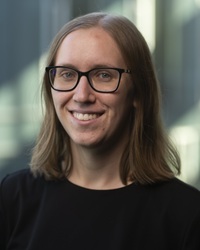
Speaker:
Prof. Sarah Scheffler, Assistant Professor at Carnegie Mellon University in CyLab, CMU's Security and Privacy Institute
Abstract:
Age assurance systems are now deployed at scale. We present empirical evidence on how adults react to age assurance systems in practice. We conducted an IRB-approved, deceptive web experiment (n = 1,635) to examine how different age verification methods affect adults' decisions to access age-restricted content. Participants, recruited to evaluate R-rated movie clips, were randomly assigned to one of seven verification conditions: checkbox self-attestation, government-issued ID upload (with varying privacy reassurances), government-issued ID with liveness check, AI facial age estimation, or email age estimation. Completion rates varied substantially by method. Checkbox self-attestation achieved 99% completion, government-ID methods 18–27% regardless of reassurances, email 86%, and AI 51%. Follow-up surveys (n = 881) revealed low comfort even among participants who completed verification. Participants perceived government-ID and AI methods as significantly riskier, rated no method as particularly effective at preventing minors' access, and found government-ID methods significantly less convenient. Higher comfort and lower perceived risk were associated with higher completion. This was joint work with Cheng Zhang, Madelyne Xiao, Lorrie Faith Cranor, and Sarah Scheffler.
Bio:
Sarah Scheffler is an Assistant Professor at Carnegie Mellon University in CyLab, CMU's Security and Privacy Institute. Her research centers on applied cryptography and its intersection with policy, including age verification, digital ID infrastructures, end-to-end encryption, compelled decryption, privacy-respecting data journalism, and private and secure autonomous systems. She also does research in "pure" applied cryptography, including works on zero-knowledge proofs and multi-party computation. Her Ph.D. is in computer science from Boston University, and prior to joining CMU in 2024 she held postdoctoral positions at MIT and Princeton.
Pricing
-
Free
Dates and Times
Event date: Oct 2026
Wednesday 7 Oct 2026
Online virtual event
10.00am to 11.00am AEDT
Login details will be emailed to registrants
Contact
More information
About our CSIRO Cybersecurity Seminars
These events were initially organised in collaboration with the Cyber Security CRC, supported by the Commonwealth (2017–2024). Following the CSCRC's winding down, the series transitioned to become the CSIRO Cybersecurity Seminar. We have been honoured to host leading researchers from top institutions worldwide – including Stanford, MIT, Purdue University, Carnegie Mellon University, Samsung, Google Research, CISPA and a lot more – and to connect them with Australia's top cybersecurity researchers and experts.